I recently saw the movie ‘The Dig’, which tells us about the discovery of an early 7th century funerary ship at Sutton Hoo, in the United Kingdom, in 1939 – shortly before World War II began – and given my love of history and archeological finds, I decided to do a bit of research that I’d like to share with you.
A few years ago, I was at the British Museum, in London, trying to see and virtually absorb the Sutton Hoo treasure, but the number of people who had the same idea was amazing, which only left me with the possibility of looking at the amazing pieces rather quickly – not how I would have loved to… So I have now resorted to the internet to find all the information I want and to look at the objects in their amazing detail. If the subject interests you, I have included several links where you can find additional information on these marvelous objects.
The discovery of the remains of this funerary vessel was extremely important because it provided crucial information regarding the Anglo-Saxons, who until then had been considered to be a rudimentary society, lacking substantial knowledge and artistic skills – but you need only to see the wonderful pieces found at Sutton Hoo to see that none of this was true. This is one of the most important discoveries in the United Kingdom and some of the objects found have some sort of connection to the epic poem Beowulf.
Initially, and if you have seen the movie you already know, the excavation was carried out by Basil Brown, who had been hired by Edith Pretty, owner of the land where the mound was located. Later, when the importance of the find became evident, the British Museum assumed the responsibility for the dig. They are currently the keepers and guardians of the findings, which speak to us of their amazing handicraft and of the existence of important international trade connections. These objects also indicate that the luxury and the amazing treasures mentioned in Saxon poetry were not a myth.
The imprint of a ship was found at the bottom of the mound, measuring 27 meters in length, and in the center of it was the place where the funerary chamber with the treasures must have been. Intriguingly, no body was found; there is only a slight depression at the place where the body would have been laid. It is believed that given the high acidity of the soil any buried body would have decomposed entirely.
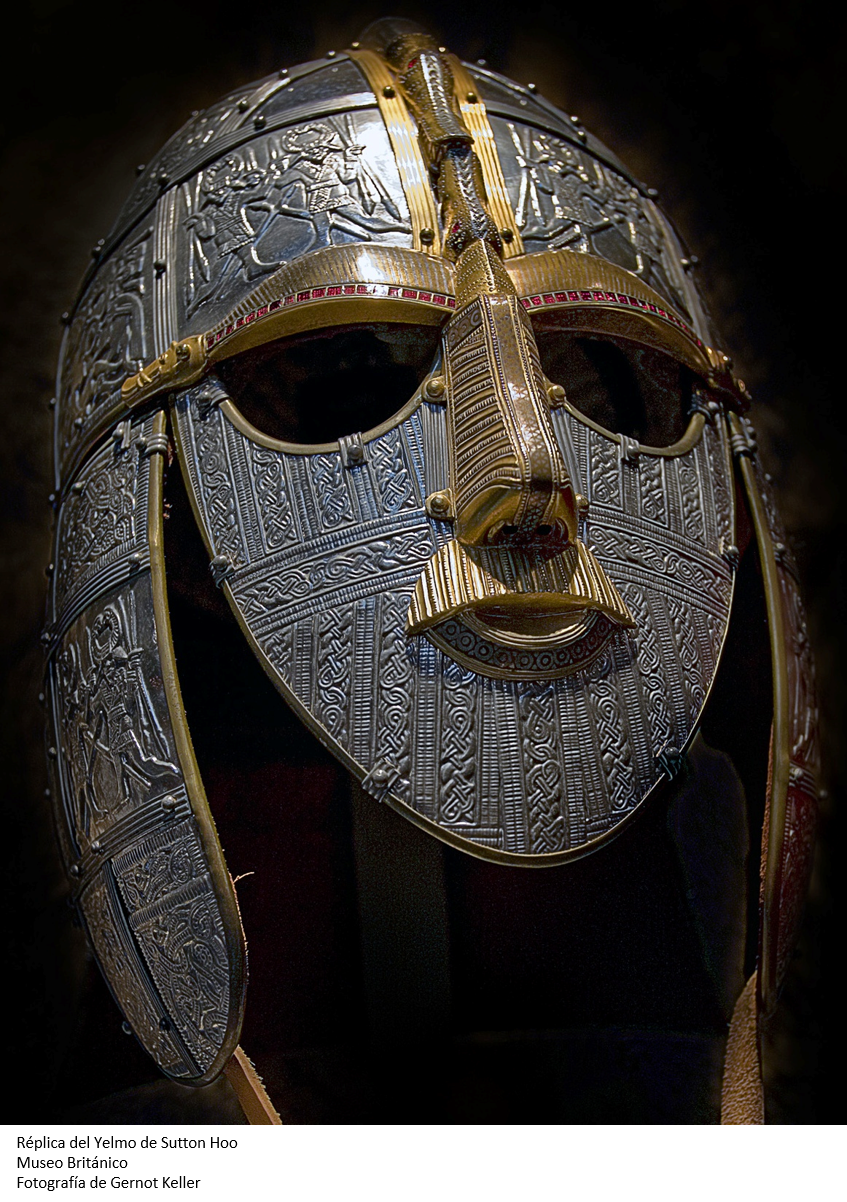
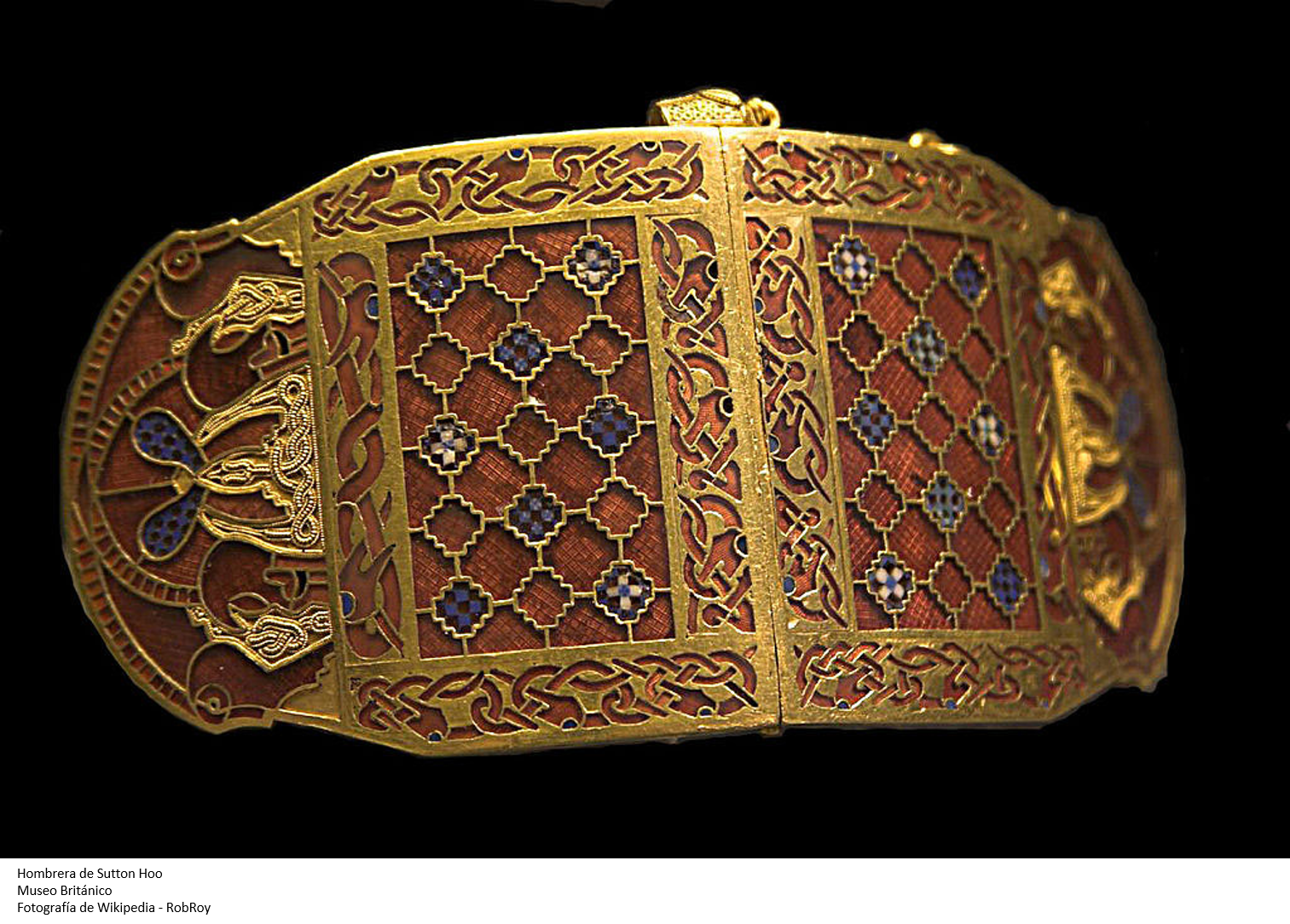
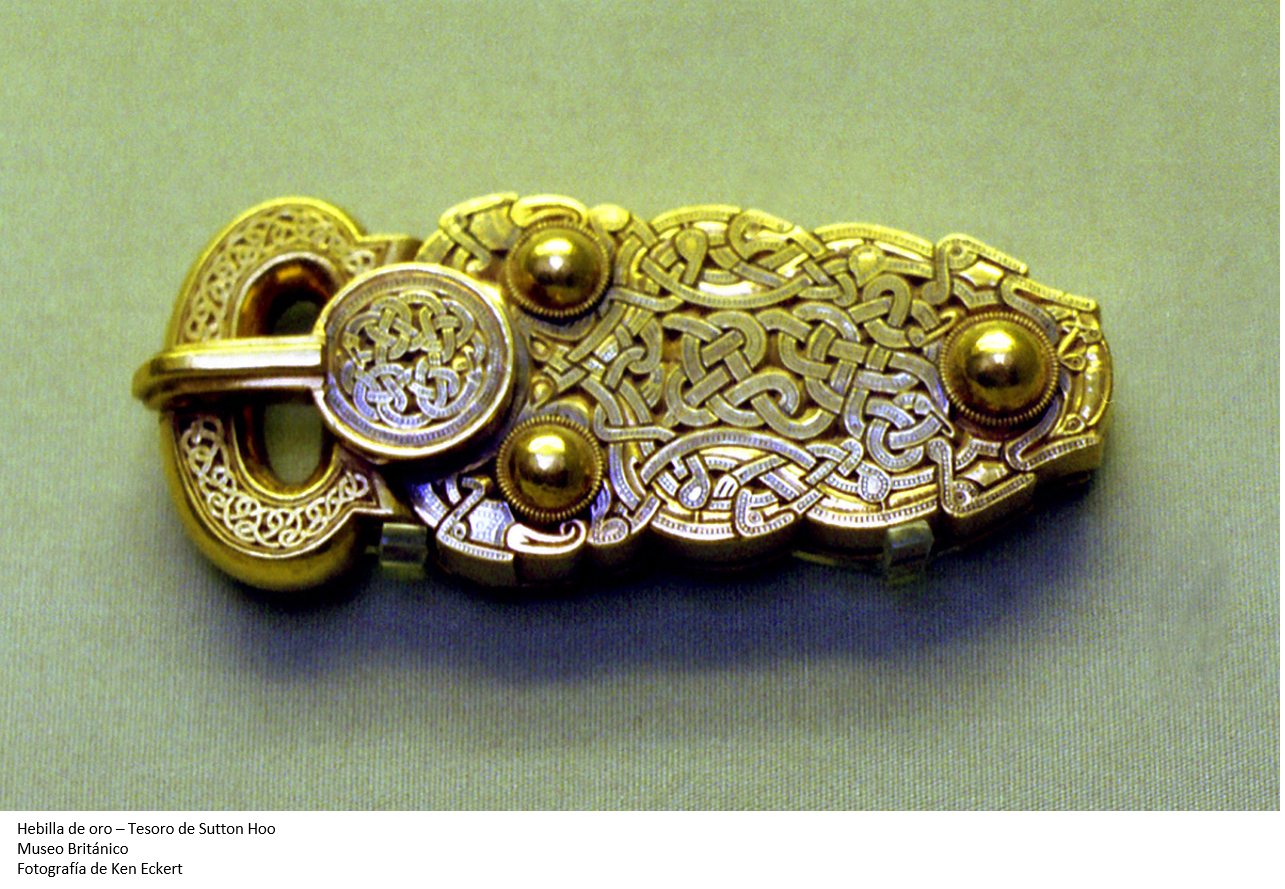
The treasure trove found at this tomb has been considered as the most important one to be found in the United Kingdom. These objects had been carefully selected to accompany the deceased person to the afterlife; some are lavish and sophisticated objects made with gold and gems: the ceremonial helmet is one of the very few that have ever been found, there is also a shield, a gold buckle, a sword and a purse, as well as dishes and other medieval objects. Thirty-seven gold coins were also found, dating back to between 595 and 640 a.D., to the Merovingian dynasty (who governed France and part of Germany during the 5th through the 8th centuries). Finding these coins actually helped date the ship’s interment. Furthermore, some of the objects came from Byzantium and other areas even further away, indicating that these people took part in the international trade system of their time.
The work required to make the pieces that were found is so complex, that even today jewelry makers have not been able to figure out exactly how they were made. The rounded shoulder clasps are covered with very thin garnets, less than a millimeter thick, and they have been polished to an absolutely smooth texture. These garnets, in turn, are laid upon gold leaf to make the gems shine even more by reflecting the light.
The art of this time is so imaginative and sophisticated that many of the designs found at Sutton Hoo were later used during the Christian medieval period; they inspired the illustrations of the wonderful medieval manuscripts and other artistic expressions.
The people who were responsible for the Sutton Hoo interment carefully chose the pieces that were to be laid with the deceased person in such a way that they would carry messages regarding the identity of the deceased and his position in society – they have lead us to understand that he was a powerful leader, owner of great wealth, and connected to the world and to the Roman past. We can even suspect, from the way that the grip of the sword has been worn, that he was left-handed. They also buried military equipment, textiles and treasures of the highest quality. The metal objects were able to survive the acid soil, while the organic materials, such as textiles and wooden objects were almost entirely dissolved.
And now, 1400 years later, we can catch a glimpse of the life of the person who was buried in a mound in England and we can have a greater knowledge of the Anglo-Saxon years, which had formerly been regarded as “dark”. If you happen to be in London, make sure you visit the British Museum, not only for the Sutton Hoo Treasure but to see all the magnificent objects it houses.
 Nora's Blog... Sixty and Still Going Strong!!
