As beautiful as the sculpture of Copenhagen’s Mermaid is, I have always wondered why it has become one of the city’s symbols, given that these mythological creatures have not distinguished themselves for having particularly outstanding qualities.
But then again, the mermaid at Copenhagen is the main character of one of Hans Christian Andersen’s stories and, given that he is a renowned and well-loved Danish author, this would be reason enough for her to be eternally sitting on a rock, gazing at the sea.
However, I do believe that The Little Mermaid fairy tale is quite sad and cruel. Disney has later given us Ariel, making the story more enjoyable and suitable to the taste of the children of today, but in the original version, this poor mermaid falls in love with a prince whom she saves from drowning when his ship capsizes. In order to be able to be near him, she resorts to the Witch of the Sea and asks her to give her legs and to make it possible for her to live out of water. As a result of this pact, she loses her beautiful voice, gives up the right to live the 300 years that mermaids can live, has to suffer constant, excruciating pain and, if the prince decides to marry someone else (which he does, breaking her heart) she is destined to die the day after the wedding. Nothing to do with the Little Mermaid story we know today.
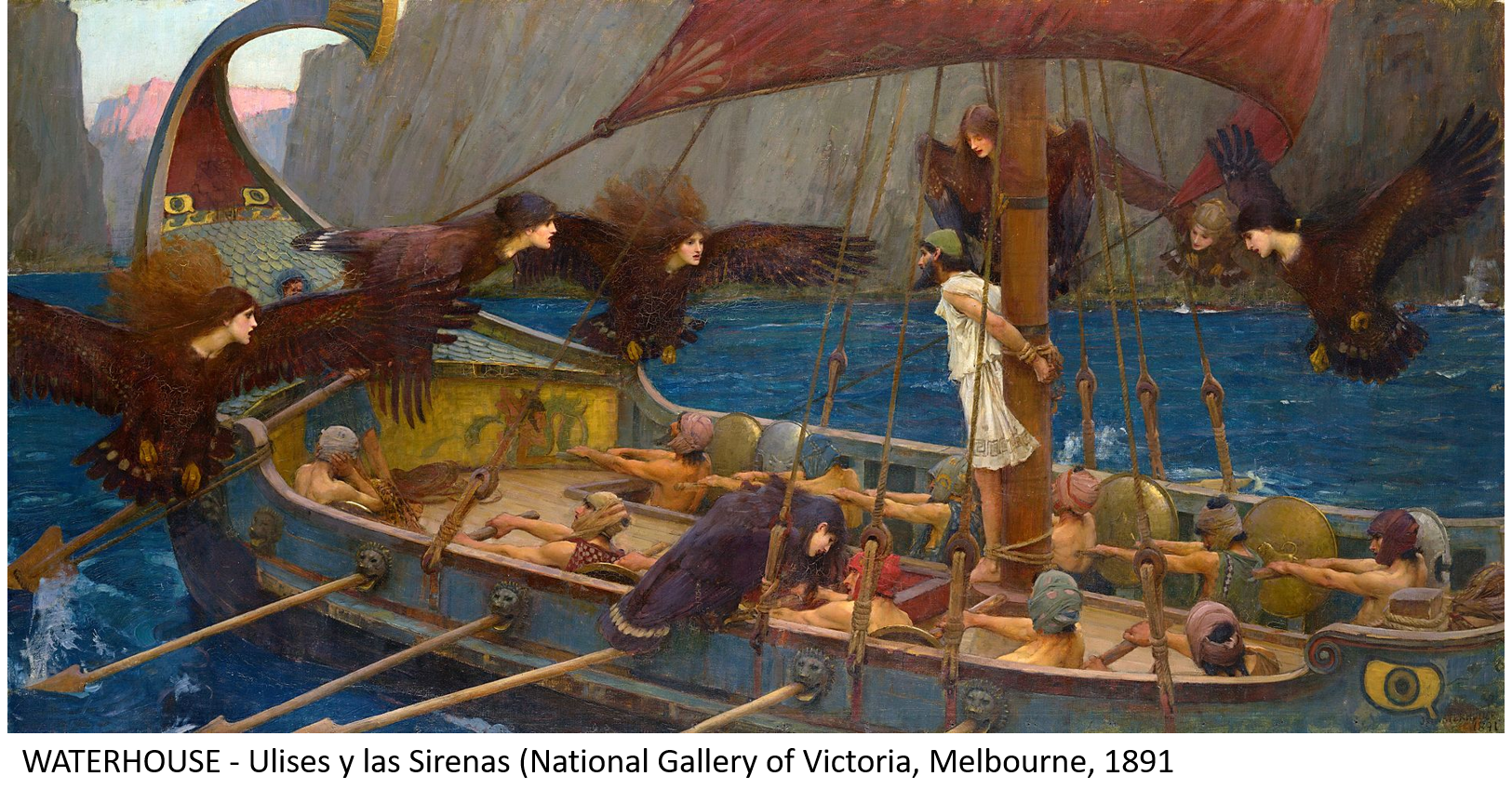
The myth of the sirens and mermaids goes back to ancient times, first appearing in Assyria before the year 1000 b.C. and, throughout the centuries, they have been given two definite and different forms. Originally, sirens had the head and torso of a woman and the body of a bird, and they lived on a rocky island. Later on, they changed and adopted the form of the mermaid – a beautiful woman with the tail of a fish, and they lived underwater. The one distinctive trait that remained constant was their irresistible voice that lured sailors to their death. Homer tells us that Ulysses tied himself to his ship’s mast in order to be able to hear their song without falling under the spell, while the rest of the sailors had blocked their ears with wax in order to be safe.
There are exceptional occasions where mermaids have been treated with greater kindness. In Chinese legends, mermaids were considered to be wonderful creatures, and their tears turned into pearls. There is also a legend in Cantabria that tells of mermaids who sing to warn sailors of nearby perils and to keep them from crashing into the cliffs.
But I think it can be agreed that, in general terms, the poor mermaids have always had bad press – they have constantly been portrayed as seductive creatures whose only purpose is to lure men to their destruction.
 Nora's Blog... Sixty and Still Going Strong!!