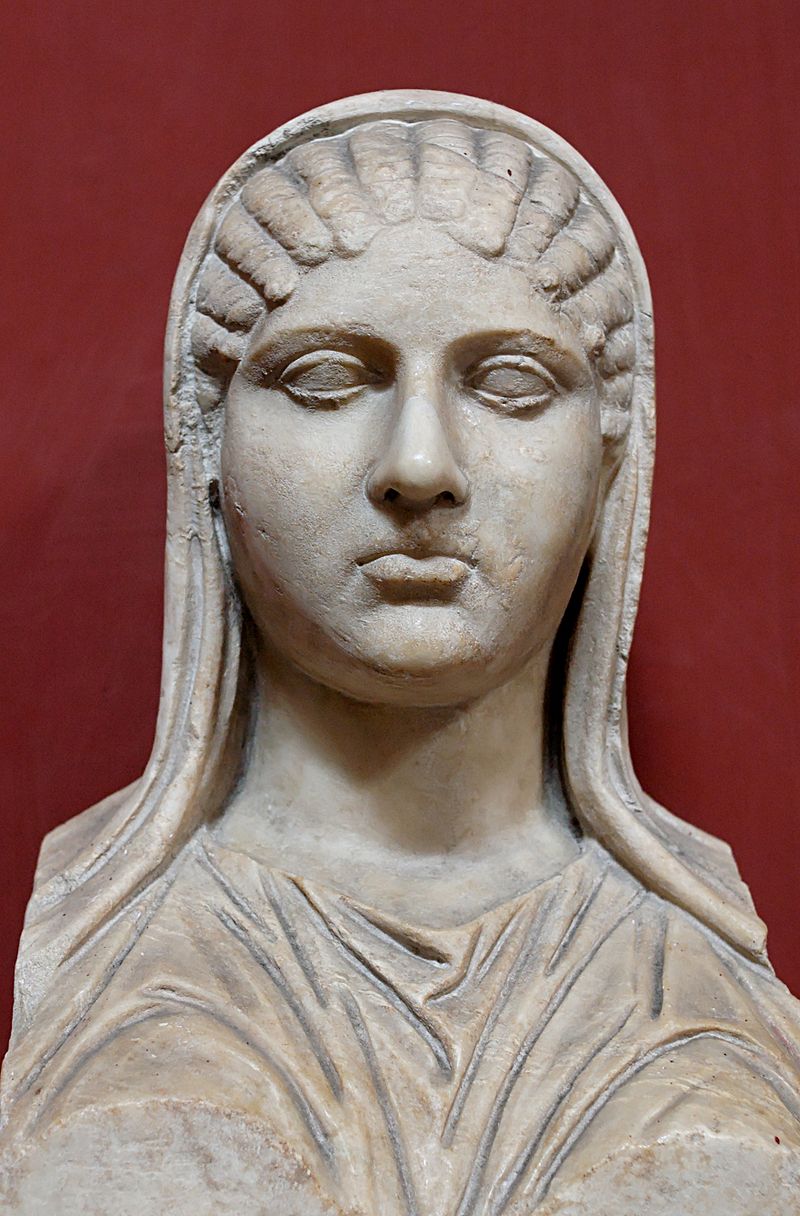
Aspasia of Miletus’ influence and importance have come down to us through centuries of history. Although the reason the we know of her today is partly due to the fact that her name is entwined with that of the Athenian statesman, Pericles, from the year 450 – 445 bce until his death in 429 bce, she is entitled to her fame by her own right as she had an enormous influence on the cultural and political life of Athens during the Age of Pericles. Plato, Aristophanes and other authors of the times mention her in their writings and Plutarch includes her in his biography of Pericles.
Although we don’t know the exact date of her birth, it is believed that she was born sometime around 475 bce in the city of Miletus, now Aydin in Turkey. We have no knowledge of why her family moved to Athens but she probably lived there between 470 – 400 bce. She was evidently part of a wealthy family, given the excellent education she received, and it was precisely because she was so well educated that some historians believed she might have been a hetaera (a courtesan in ancient Athens) given that these women were different from the rest of the Athenian women in the fact that they were well educated. They were also economically independent and paid taxes. This was probably as close as you could get to being a liberated woman in ancient Athens, and Aspasia, who became an important figure in Athenian society, was the most obvious example. If she really was a hetaera and was, furthermore, a foreigner, Aspasia was free from the legal restrictions imposed on Athenian women which confined them to their homes, and she was able to participate in the city’s public life.
Modern historians, however, doubt that she was a hetaera, and they have suggested that after divorcing his first wife (approximately in 445 bce) Pericles lived with Aspasia, although their marital status is still undecided. Their son, Pericles the Young was probably born in 440 bce and years later became a general of the Athenian Military Academy.
History tells us that Aspasia stood out in the social circles of ancient Athens, not only because of her beauty but also due to her brilliant conversation and rhetoric. She fit right in among Pericles friends, among them Anaxagoras. Plutarch tells us that her home became Athens’s intellectual center, drawing to it the most prominent authors and intellectuals, including the philosopher Socrates.
Regardless of how or where she acquired her magnificent education, it is undeniable that she was an expert in rhetoric; both in her knowledge of history and chronicles as well as in her ability to impart that knowledge. She was admired and respected by the most illustrious and renowned intellectuals of her time and she actively contributed to the flourishing of cultural life in Athens.
During the time that Pericles governed Athens, she was accused of instigating Athens’s support of Miletus during their conflict with Samos in 440-439 bce. This led Pericles’ enemies to believe that Aspasia had a strong influence over him regarding state matters. Before the start of the Peloponnesian War, the enemies of Pericles and Aspasia began a series of personal and judicial attacks against them. Aspasia was particularly accused of corrupting the women of Athens to satisfy Pericles’ depravity. According to Plutarch, she was taken to trial accused of impiety.
It is more than likely that all accusations were completely false and Aspasia was finally declared innocent, but this was a very bitter experience for both of them.
In 429 bce, Pericles’s two sons with his first wife died of the Plague of Athens. He was overwhelmed and inconsolable and not even Aspasia could help him. Soon after, Pericles also died of the plague but shortly before dying he was able to persuade the people of Athens to approve a change to the law of 451 bce, whereby his son with Aspasia was declared to be a citizen and his legitimate heir (until then, only those born of Athenian father and mother could be considered to be Athenian citizens).
Aspasia is believed to have died in 401-400 bce given that we know she died before Socrates’ execution in 399 bce.
Centuries later, Aspasia still influences art, modern literature – her love affair with Pericles has inspired famous novelists and poets – as well as authors of historical novels.
 Nora's Blog... Sixty and Still Going Strong!!