After almost 10 years since my last visit, I recently had the opportunity to travel to Europe again; to Madrid and Paris, to be precise. In the manner of a travel journal I will tell you about some of the things that I’ve seen which have particularly impressed me. You might find them interesting enough to visit them yourselves when you have the chance to do so. Interestingly enough, this time around I have enjoyed everything I’ve seen more than I ever did before. It may be that, at this point in life, I might have acquired the necessary level of wisdom to appreciate such marvels!!! Apparently, I might be a late bloomer…
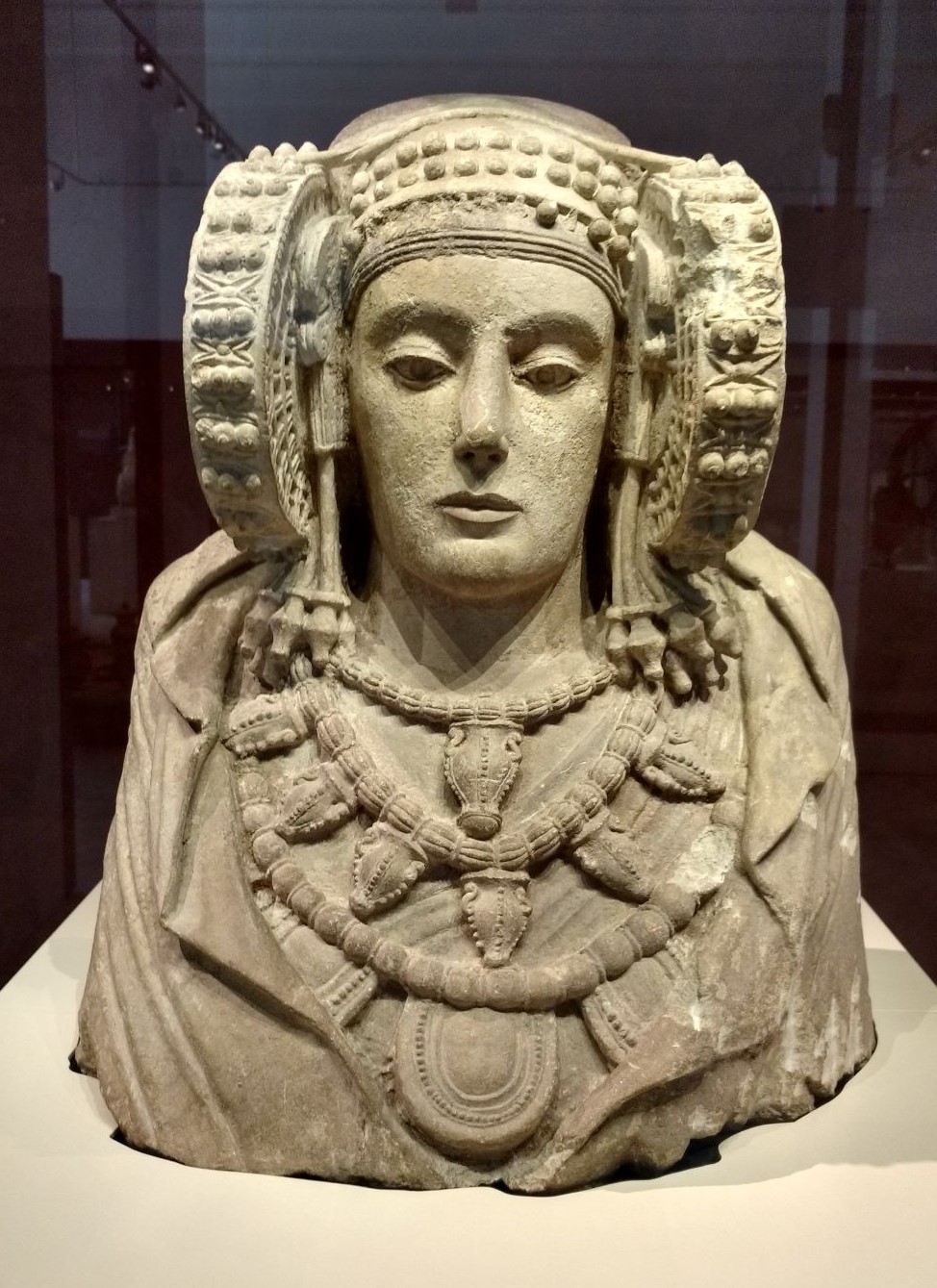
I would like to tell you about the National Archeological Museum of Madrid and, specifically, about a sculpture that I went there looking for – the Lady of Elche. The Museum is located in the Palace of the National Libraries and Museums, a beautiful XIX Century building. All artifacts in the museum are exceptionably well displayed, and the visit will turn out to be a very educational experience.
But I was there with a specific goal in mind: to see the Lady of Elche. This is an Iberian sculpture dating back to the V – VI centuries BC, which was found in 1897 in Elche, in Alicante. It is the bust of a woman with perfect features, elegantly dressed with tunics, adorned with necklaces, and wearing a very elaborate headdress. Originally it was colorfully painted, and traces of the ancient pigments still remain. There is also an opening in the rear part of the sculpture which suggests it may have been used as a funerary urn or that this space was somehow used to attach it to the wall. The reason for the opening, however, is not clear.
It is also unclear if the original form of the sculpture is that of the bust that we see today or if it’s part of a larger sculpture, with the lady standing or sitting, and we will probably never know. We also don’t know for sure if this is the representation of the Phoenician goddess Tanit, a divinity that ruled over life and death, or if it represents an actual person.
When it was discovered, the Louvre Museum purchased it, and in 1897 it was exhibited in their Department of Oriental Antiquities. In February 1941, by means of a treaty between Spain and France, the Lady of Elche returned to Spain and was part of the Prado Museum’s collection until 1971 when it became part of the permanent collection of the Archeological Museum.
This is a very succinct story about the Lady of Elche. For me, it is a beautiful sculpture of a mysterious woman of long ago and if you happen to be in Madrid, make sure you visit the Archeological Museum to see her. I think you will find it to be worth it!!!
 Nora's Blog... Sixty and Still Going Strong!!